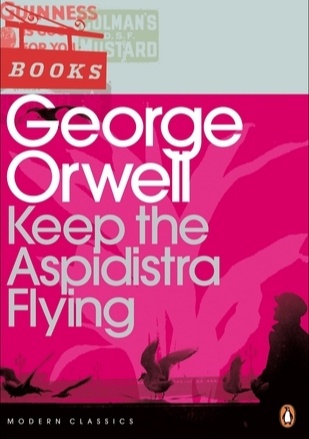
London, 1936. Gordon Comstock has declared war on the money god; and Gordon is losing the war. Nearly 30 and "rather moth-eaten already," a poet whose one small book of verse has fallen "flatter than any pancake," Gordon has given up a "good" job and gone to work in a bookshop at half his former salary. Always broke, but too proud to accept charity, he rarely sees his few friends and cannot get the virginal Rosemary to bed because (or so he believes), "If you have no money ... women won't love you." On the windowsill of Gordon's shabby rooming-house room is a sickly but unkillable aspidistra--a plant he abhors as the banner of the sort of "mingy, lower-middle-class decency" he is fleeing in his downward flight.
In Keep the Aspidistra Flying, George Orwell has created a darkly compassionate satire to which anyone who has ever been oppressed by the lack of brass, or by the need to make it, will all too easily relate. He etches the ugly insanity of what Gordon calls "the money-world" in unflinching detail, but the satire has a second edge, too, and Gordon himself is scarcely heroic. In the course of his misadventures, we become grindingly aware that his radical solution to the problem of the money-world is no solution at all--that in his desperate reaction against a monstrous system, he has become something of a monster himself.
Orwell keeps both of his edges sharp to the very end--a "happy" ending that poses tough questions about just how happy it really is. That the book itself is not sour, but constantly fresh and frequently funny, is the result of Orwell's steady, unsentimental attention to the telling detail; his dry, quiet humor; his fascination with both the follies and the excellences of his characters; and his courageous refusal to embrace the comforts of any easy answer.